
Neshoba County Release Meaning
A release record answers when and how one custodian gave up control. That question is narrower than whether a criminal case ended. At the Neshoba County Law Enforcement Center, a person may bond out, leave on recognizance, be released by a judge, finish a local term, or transfer to another agency. The dated Neshoba County Detention Center Arrest/Release Report uses exact labels for several of these outcomes. Each label changes the next search step. A transfer ends the county booking but does not mean the person entered the community.
The custodian matters more than the county named on a charge. The sheriff runs the local Neshoba County jail. Mississippi Band of Choctaw Indians Public Safety maintains a separate tribal detention system. Kemper/Neshoba County Regional Correctional Facility holds state inmates under an MDOC framework even though it is operated through a regional agreement and sits in Kemper County. Federal and immigration custody require still other tools. A reliable search keeps those systems apart and traces one custody episode at a time.
- Release
- The point when one agency ends its custody, whether to the community or another custodian.
- Transfer
- Movement to another agency, facility, or jurisdiction rather than freedom from custody.
- Parole
- Board-approved conditional release from a state sentence under supervision.
- Discharge
- The documented end of the sentence or supervision described by the issuing agency.
Neshoba County Release Types
The local report ties each release event to a booking and a method. A method should be quoted as the record displays it. It should not be stretched into a claim about final case outcome. Bond and recognizance usually end the jail stay while court duties continue. A judge-ordered release documents authority but may require the related order to explain why it occurred. State parole, Earned Release Supervision, and final discharge are MDOC events, not names for a routine county bond-out.
| Record label or path | What it establishes | Where to check next |
|---|---|---|
| BONDED OUT | The local jail stay ended through bond | Jail timestamp and the court bond order |
| RELEASED OWN RECOGNIZANCE | The person left without a cash bond recorded in that method | Release entry and court docket |
| RELEASED BY JUDGE | A judicial action authorized the jail exit | Order, judgment, or docket entry |
| TRANSFERRED TO ANOTHER AGENCY | Neshoba custody ended but other custody followed | Receiving agency and its locator |
| Parole or ERS | A state sentence moved into supervised release | MDOC parolee record and Community Corrections |
| Discharge | The issuing correctional system documented sentence completion | Discharge certificate or official time record |
Time served and dismissal also need care. A sentence-credit or time-served order can explain a release, while a dismissal addresses the case rather than the jail's physical processing time. The release entry and court file answer different parts of the same event. Match the name, date of birth when public, booking number, dates, and releasing agency before joining them.
Neshoba Release Record Fields
The NCDC Arrest/Release Report is the strongest located public example of the county's release fields. It mixes arrest-only entries with arrest-and-release entries. Blank release fields mean the printout did not show a release for that entry at print time. They do not prove that the person is held today. Read the event label and the release fields together, then match the booking number to avoid confusing two people or two separate bookings for the same person.
- Event label
- Shows whether the row is marked ARREST or ARR/REL.
- Identity fields
- Name, race, sex, and date of birth help separate similar names.
- Booking and ID numbers
- Tie the entry to the specific custody episode and agency identifier.
- Booked and released times
- Give the minute-level start and end shown for that local booking.
- How Released
- Records bond, recognizance, judge release, or transfer method.
- Agency, charge, and bond
- Supply booking context but do not replace the final court disposition.
The custody indicator may say COUNTY or MDOC, another reason not to treat the report as a simple community-release list. Address information may also appear, but it is not needed to confirm most release events. The key proof is a matching identity, booking number, released timestamp, and method. If the method says transfer, request the receiving agency. If the precise legal reason is unclear, obtain the related order or docket entry.
Request Neshoba Release Records
Neshoba County routes Public Records Act requests through the Chancery Clerk as Public Records Officer. The county public-record policy and form allow a written request by form, letter, fax, or email. A qualifying request is not accepted by telephone or in person. A narrow description helps the custodian locate an existing jail-docket entry without being asked to create a new report.
- Identify the person, date of birth if known, booking or ID number, and a bounded booking-and-release date range.
- Ask for the booked timestamp, released timestamp, exact release method, and the receiving agency if the record shows a transfer.
- Request the booking photograph as a separate item. Ask for an electronic copy if the record already exists in that form.
- Send the written request to the Chancery Clerk at 401 East Beacon Street, Suite 107, Philadelphia, MS 39350, by email at chanceryclerk@neshobacounty.net, or by the listed fax route.
- Keep the submission and response. If material is withheld, ask for the nonexempt portion and the specific exemption used for each redaction or denial.
The county policy states that within seven business days the office will produce the record, estimate availability, seek clarification, or deny the request. Inspection is offered Monday through Friday from 8:00 a.m. to 5:00 p.m., excluding legal holidays. Fees are $0.50 per black-and-white page, $0.75 per color page, and $0.25 per scanned page. Emailing an electronic record already available carries no charge, while media, mailing, and qualified search, review, or redaction work may be billed at actual cost.
Chancery Clerk
401 East Beacon Street, Suite 107
Philadelphia, MS 39350
601-656-3581
chanceryclerk@neshobacounty.net
Correct Neshoba Release Records
The written policy also supplies a local path when an entry is missing, unclear, or denied. Start by identifying the exact booking and the fields that need confirmation. Ask for the custodian's written response. That creates a record of the question and helps distinguish a true absence from a search that used the wrong spelling, date range, or agency. When an exempt part can be separated, Mississippi's policy framework calls for release of the nonexempt part.
A requester may petition for internal review of a county denial. The policy says the county administrator must affirm or reverse that denial within two business days. Ethics Commission and court review remain later routes under the Public Records Act. This process is about lawful record access and correction. It cannot force disclosure of juvenile, sealed, expunged, victim-sensitive, medical, investigative, or other exempt material. If a page is absent, describe it as not found or not shown instead of guessing why.
A blank field means “not shown in this source.” It does not mean no later release or transfer occurred.
Neshoba Release Record Law
The Mississippi Public Records Act, sections 25-61-1 through 25-61-19, favors access to government records subject to specific exemptions. Section 25-61-5 permits reasonable procedures and requires a written denial to cite the exemption. Section 25-61-7 ties charges to actual search, review, duplication, and mailing cost. Judicial records also operate under court access rules. A jail release entry, court order, and MDOC discharge file can therefore have different custodians and different lawful limits.
Expungement changes public access to eligible records. It does not change the historic fact that a custodian processed a booking and release. As of the research date, Mississippi's 2026 amendment reduced the waiting period for an eligible felony petition from five years to three after successful completion, while retaining offense exclusions and procedural limits. A public search that returns nothing does not prove that an arrest never happened or that a record was expunged. Accept the access limit and use only information the clerk or custodian may lawfully provide.
Find Neshoba Released Inmates
Begin with the most likely custodian. For a sheriff booking, inspect the dated NCDC report and current app roster, then call the Law Enforcement Center at 601-656-1414 for immediate status clarification. A call helps with navigation, but a dated release entry or written response is better proof. For a state sentence or hold, search MDOC. For tribal custody, contact Choctaw Detention or the Choctaw Court. Federal and immigration tools should be used only when the facts support those jurisdictions.
- Fix the custody episode by agency, facility, approximate dates, and one disambiguating identifier.
- Read the sheriff report's Released and How Released fields. Never infer community release from roster absence.
- Search both MDOC inmate and parolee forms when a state sentence, regional placement, parole, or ERS may apply.
- Check Justice Court for initial appearance or bond, then Circuit or County Court for later disposition and judgment.
- Use SAVIN/VINELink for a specific-person alert if the source agency participates, and confirm any event with that custodian.
- Submit a county or MDOC records request when online pages do not preserve the needed release event.
For an older case, a jail docket, judgment, discharge certificate, or official federal locator row may outlast a transient roster. Compare update dates if systems conflict. A person can bond out, later receive an MDOC sentence, enter parole, and be booked again. Keep each event on its own timeline rather than merging records because the name matches.
MDOC Neshoba Release Search
MDOC presents separate Inmate Search and Parolees Search forms. Both accept first name, last name, or MDOC ID. The inmate form is the first state-custody path. The parolee form addresses post-release state supervision. Neither is a routine county bond-release index. On a detail page, compare the MDOC ID, date of birth, county of conviction, offense, sentence date, location, and the exact field labeled Tentative Release.
| Search field | Use | Limit |
|---|---|---|
| First and last name | Find possible state offender matches | Names repeat and spelling can differ |
| MDOC ID | Go to the known state record | Applies only to the MDOC identity |
| Location | Shows the listed MDOC placement | It is not a county release method |
| Tentative Release | Shows MDOC planning data | It is not proof of actual release |
| Parolee result | Shows a post-release supervision path | Eligibility alone is not a parole grant |
MDOC warns that state law can change release types and dates. Its research materials say time computation establishes parole, ERS, tentative release or discharge, and maximum-release dates. A case manager can supply an exact operational date, while MDOC Records can address a nonexempt discharge certificate or time record. The public tentative field is a lead, not a promise.
The official MDOC inmate-search screen shows the statewide entry point used for Neshoba-related state custody.
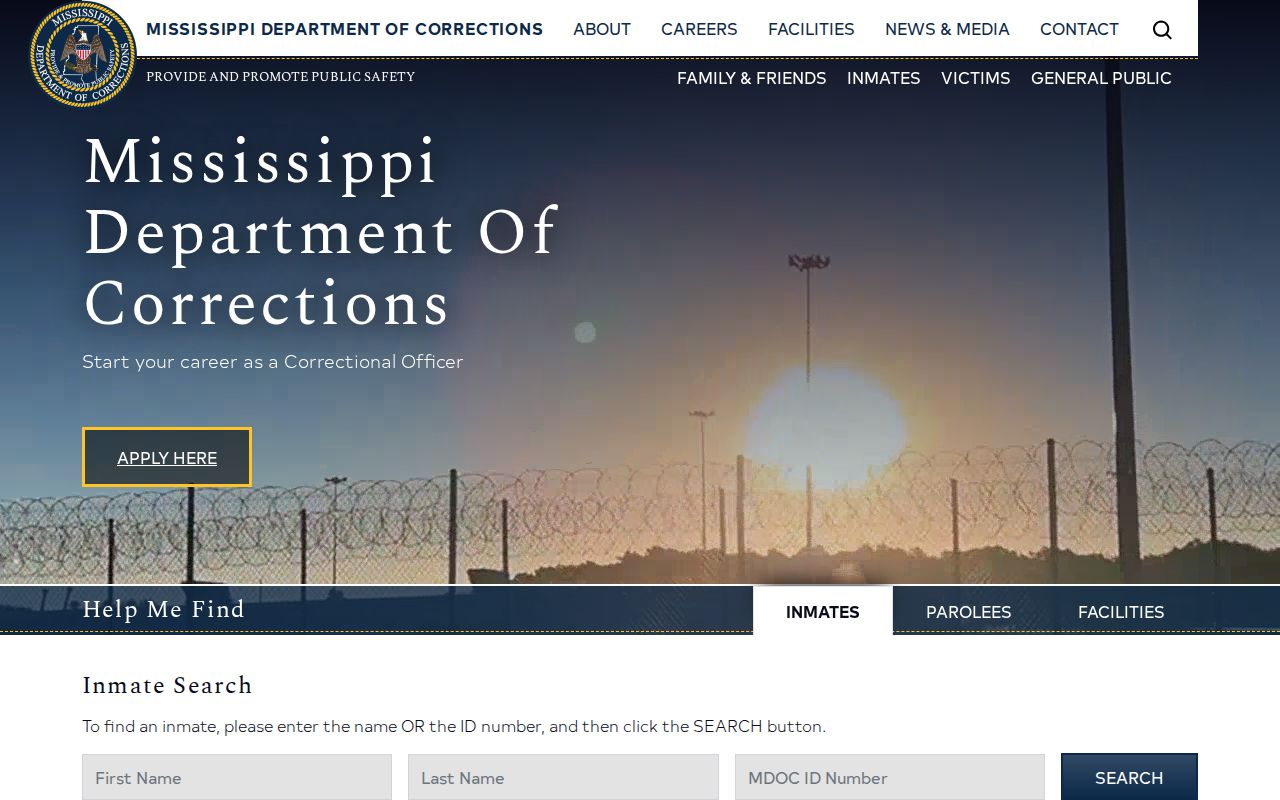
The state form belongs after the custodian is identified; it does not replace the Neshoba jail record for a local bond release.
Neshoba County Release Court Trail
Neshoba release research may cross three court-access layers. Justice Court handles jail initial appearances, county matters, and felony affidavits. Its judges conduct jail sessions to provide an initial appearance within three days of arrest. A bond order may begin there. The Circuit Clerk keeps indictments, motions, judgments, and related papers in Circuit and County Court matters. Those records may explain a dismissal, plea, sentence, probation term, revocation, or credit that the jail's short release label cannot.
The Eighth Circuit MEC information identifies June 24, 2024 as Neshoba Circuit Court's electronic go-live date. An older disposition or a nonelectronic document may therefore require direct clerk contact even when newer cases appear through MEC. A docket status such as CLOSED describes the case, not current custody. Use a court order to explain authority and the jail or corrections record to establish the physical release time.
Does a closed case prove release? No. It may reflect dismissal, judgment, or administrative completion. Match the court event with the custodian's release or transfer record.
Neshoba County Recent Releases
No verified county-run rolling 24-hour or 72-hour release page was found. The best located local artifact is a dated Arrest/Release PDF with a selection spanning about eight days. It mixes arrests, releases, and transfers and has no proven update cadence or retention period. It must not be renamed a live recent-release feed. The official sheriff app supplies jail information, a current inmate roster, and push notifications, but the available evidence does not establish a release module or archive.
Use the detailed Released date/time and How Released fields in any report that covers the requested dates. For a custom period, ask for an existing jail-docket or release extract bounded by exact start and end timestamps. A current roster is useful for current custody, not for reconstructing who left. Local records and court files are the fallback when a dated report has aged off or never covered the event.
The official sheriff page confirms the Neshoba jail identity and contact route.
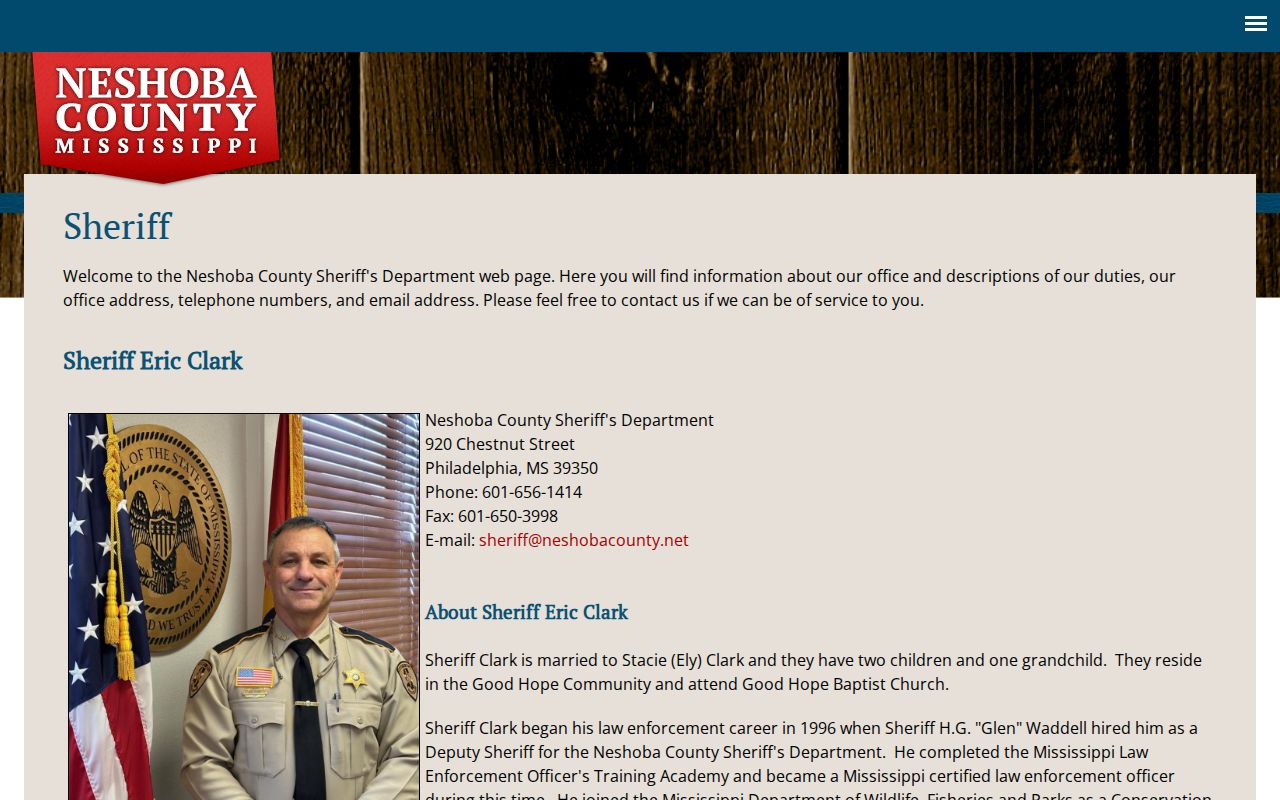
That source anchors the local custodian, while the separate dated report supplies event-level release fields.
Neshoba Release Facility History
The current Law Enforcement Center opened in January 1995 at 920 Chestnut Street. Neshoba County reports that it was built in under seven months for $1.8 million, exceeds 15,000 square feet, and used an early factory-assembled welded-steel detention design. Its listed capacity includes 52 maximum-security beds and 12 work-crew beds. Those facts identify today's sheriff-run release custodian and distinguish it from Philadelphia's former 1954 jail.
Historic location details can misroute a records request. The practical Neshoba release search remains tied to the active Law Enforcement Center, its jail docket, and the county Public Records Officer. The county page does not publish a standard release hour, exit door, family waiting place, transport plan, or property-return rule. Anyone arranging pickup must ask the facility rather than infer those logistics from the building history or a roster entry.
Choose Neshoba Release Custodian
Neshoba County contains separate systems that make a county-only search incomplete. Choctaw Adult Detention Center operates under tribal authority and Choctaw Court jurisdiction. Its records are not automatically covered by the sheriff app, county release report, or MDOC forms. Youth detention shares the Smith John Justice Complex, but juvenile confidentiality controls. Youth identities should not be placed in an adult public locator, and absence from a list must never be used to infer release.
Kemper/Neshoba County Regional Correctional Facility presents the opposite naming trap. It includes Neshoba in its title but sits at 374 Stennis Industrial Park Road in DeKalb, Kemper County. It houses state offenders in a regional framework with MDOC oversight. State inmates leaving that facility should be traced through MDOC time, discharge, parolee, and SAVIN records. The facility name does not make its releases county-jail bond events.
- Neshoba County Law Enforcement Center: sheriff release report, jail docket, court order, or county records request.
- Choctaw Adult Detention Center: direct tribal detention and Choctaw Court confirmation.
- Choctaw Youth Detention Center: authorized, confidentiality-respecting tribal inquiry only.
- Kemper/Neshoba County Regional Correctional Facility: MDOC inmate or parolee search, SAVIN, time record, or discharge certificate.
Neshoba Release System Comparison
A released person and a person still held appear in different places. A live sheriff roster describes current local custody. A local release report preserves a dated county exit. MDOC location and Tentative Release fields concern state placement and planning. A parolee result concerns state supervision after physical release. SAVIN offers event alerts from participating source agencies. The BOP locator concerns federal custody, while ICE's locator applies only when immigration detention is supported.
| Question | Best first source | What requires confirmation |
|---|---|---|
| Still in the Neshoba jail? | Current app roster or jail call | Roster absence does not name the exit path |
| County booking ended? | NCDC release record | Read timestamp, method, and receiving agency |
| State inmate release planned? | MDOC inmate search | Tentative date can change |
| State supervision active? | MDOC parolee search | Verify through Community Corrections |
| Federal custody ended? | BOP Inmate Locator | Released may still mean other custody or supervision |
| Immigration custody involved? | ICE ODLS | County exit alone does not rule out an ICE transfer |
The BOP Inmate Locator shows a release date and location for federal records from 1982 onward. Released or Not in BOP Custody means only that BOP no longer holds the person. It does not rule out another agency or federal supervision. ICE and BOP are exception routes for Neshoba research because no federal prison or confirmed local ICE contract facility was identified in the county.
Note: Leaving one facility does not prove community release, case completion, or the end of post-release supervision.