
Choctaw Youth Release Confirmation
A permitted response should be read for the precise event it confirms. Release to an authorized guardian, transfer to another protected placement, and a court-directed change are not interchangeable. Record the responsible tribal source and date only when the requester has authority to receive and keep that information. If the response gives no release time or destination, leave that field unknown.
Current welfare questions and historical-record questions may follow different routes. The detention center can explain present contact procedure, while Choctaw Court may control access to an order. Neither a Neshoba County court portal nor the sheriff app fills a gap in a protected tribal record. No public timing, pickup, transport, or property-return instruction was located. An authorized family member or counsel should obtain current logistics directly instead of applying a general county-jail practice.
If disclosure is denied, the refusal is not evidence of detention, release, transfer, or expungement. It may reflect youth confidentiality or the requester's lack of authority. Ask whether consent, counsel, a court process, or another protected review route is available. Stop when access is not authorized, and do not combine public fragments to defeat the tribal institution's protection.
Choctaw Youth Records Stay Protected
Choctaw Youth Detention Center is part of Smith John Justice Complex and is operated by Mississippi Band of Choctaw Indians Public Safety. The tribal source places the detention centers under the Tribal Constitution, Tribal Code, applicable federal law, and Bureau of Indian Affairs requirements. Youth detention has a protective purpose and a different disclosure setting from an adult jail. Public adult-release methods should not be applied to it.
No youth name, custody status, release date, case allegation, photograph, address, or identifying detail belongs in a public locator built for released adults. Absence from a list is not evidence of release. It may reflect confidentiality, a system that was never public, a move, or a change known only to the authorized institutions. The safe conclusion is that the public search path is not appropriate.
Important: Do not publish a youth identity or infer custody or release from a missing public result.
Route Choctaw Youth Questions
An authorized person should identify the relationship to the youth and ask the tribal office what proof or case information is needed. The facility can route a current custody or release question. Choctaw Court can address the lawful order or case process when the requester has authority to receive that information. Do not send sensitive youth data through unrelated public portals while trying to find a match.
- Confirm that the question concerns Choctaw Youth Detention rather than adult, county, or MDOC custody.
- Contact Choctaw Detention and state the authorized relationship without sharing excess details.
- Follow the facility’s identity, consent, and secure-submission instructions.
- Contact Choctaw Court when the lawful order or case route must be addressed.
- If the authorized source confirms a transfer, use the receiving institution’s protected process.
A call may provide routing, but an authorized written response or court record is the stronger source when a lasting confirmation is permitted. A public search result should never substitute for consent or access authority.
Choctaw Youth Contact Channel
The research identifies one contact route for Choctaw Detention at Smith John Justice Complex. No public youth release feed, youth locator, standard release schedule, exit point, transport instruction, or record-retention window was verified. Ask the tribal facility for current procedures. Do not invent a public route merely because an adult center shares the complex.
Choctaw Youth Detention CenterSmith John Justice Complex
James Billie Road
Mail: 125 River Ridge Circle
Choctaw, MS 39350
Phone: 601-663-7901
Fax: 601-663-7980
The official Choctaw Public Safety page establishes tribal operation and should be checked for current contact information. The Neshoba County Sheriff and county Public Records Officer are not substitutes for the tribal custodian.
Choctaw Youth Custody Meaning
Three events must remain separate. A release to an authorized guardian ends detention in one way. A transfer changes the custodian and may continue confinement or placement. A court disposition addresses the legal case and may not supply the exact time the facility processed movement. Only an authorized source can state which event occurred.
| Possible event | What it means | Authorized source |
|---|---|---|
| Release | The facility ended detention under an approved direction | Tribal facility and applicable court |
| Transfer or placement | Responsibility moved elsewhere | Sending and receiving institutions |
| Court action | A legal order or case event occurred | Choctaw Court |
| No public result | Nothing reliable about status | Use no public inference |
Keep dates and episodes distinct. A later adult booking cannot be used to reconstruct a protected youth matter. Nor should an adult custody database be read backward as proof of what happened at this center.
Choctaw Youth Jurisdiction Boundaries
Neshoba County contains a tribal detention system separate from its sheriff-run jail. The Neshoba Arrest/Release Report relates to the Neshoba County Detention Center. It is not a Choctaw youth record. MDOC search forms relate to state inmates and parolees. They do not form a youth locator. VINELink coverage depends on participating agencies, but an alert tool does not override youth confidentiality or create public access.
Kemper/Neshoba County Regional Correctional Facility is an MDOC regional site in DeKalb. Its name does not connect it to this youth center. Federal and immigration locators also should not be tried without a supported jurisdictional reason. Begin and end with the authorized tribal route unless the responsible institution directs the requester elsewhere.
- Custodian
- The institution legally responsible for custody at a given time.
- Authorized inquiry
- A request made by a person whom the responsible institution permits to receive information.
- Confidentiality
- A limit that protects youth identity and case information from public disclosure.
Choctaw Youth Placement Caution
A 2020 tribal resolution shows that an intergovernmental jail-utilization arrangement existed historically. It may help explain why a custody trail could cross an institutional line. It does not establish a current 2026 contract, a current placement, or the terms governing any individual youth. No present arrangement should be announced without confirmation from the tribal authority.
If an authorized inquiry indicates that another institution received the youth, ask the sending office how to contact that receiver through a protected channel. Do not publish the destination, identity, or movement. “Transferred” is not the same as “released,” and movement cannot be inferred from a public absence.
Note: Historical agreements explain a possible system relationship, not an individual’s present location or current institutional practice.
Choctaw Youth Source Context
The matching manifest image points to Mississippi’s expungement statute rather than a facility screen. Expungement concerns limits on public access to eligible records after a legal process; it is not a youth release locator and does not authorize reconstruction of protected facts. Its proper use here is to reinforce restraint when a record is unavailable.
The source is available through the Mississippi expungement statute page.
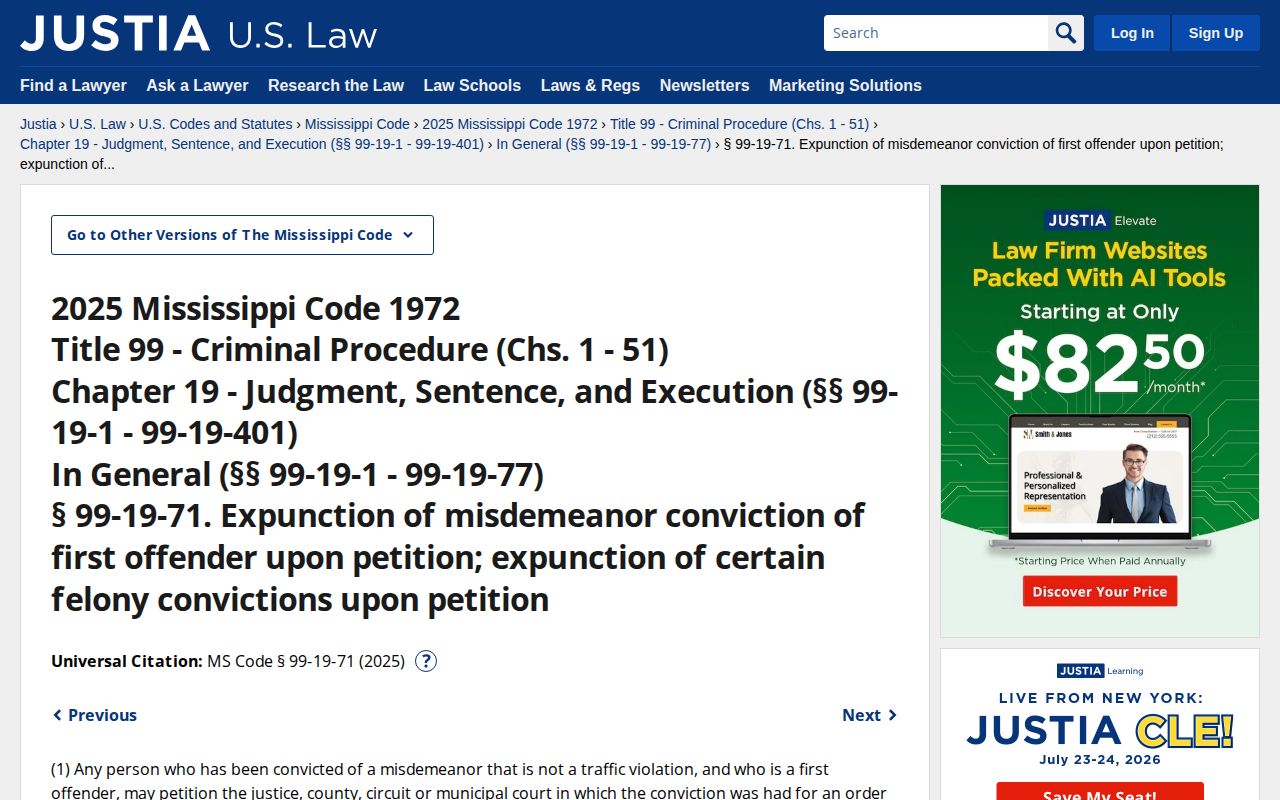
The captured legal context does not displace tribal rules. It supports the broader principle that unavailable or protected information must not be inferred from fragments.
Choctaw Youth Access Decisions
Authorized relatives should separate urgent welfare communication from a request for an official record. The detention contact can explain which office handles each need and what proof of relationship is required. A lawyer may have a formal case channel that differs from a family contact route. Following the office’s instruction protects the youth and reduces the risk that sensitive data reaches the wrong recipient.
If an office declines disclosure, do not treat that refusal as proof of detention, release, transfer, or expungement. The response may rest on confidentiality or lack of requester authority. Ask whether a lawful consent, court, counsel, or review route exists. Stop if access is not authorized. Public fragments must not be combined to defeat a protection applied by the tribal institution.
An authorized confirmation should be reported in the narrowest accurate terms. State that the responsible office confirmed the permitted fact, keep the response secure, and avoid republishing the youth’s identity or case details. Safe routing is the purpose here, not public discovery.