
Neshoba VINELink Search Coverage
Mississippi calls its service SAVIN, short for Statewide Automated Victim Information and Notification. Official MDOC material says SAVIN tracks MDOC state offenders and people held in participating county jail facilities. The statewide language does not prove that every Mississippi jail participates. Neshoba County participation was not independently established during the research sweep. Check the source agency shown in the live search or call SAVIN before depending on a county alert.
VINELink is an event and status channel. It may report release, transfer, rehousing, temporary movement, return to custody, escape, or absconding supervision when that event is supplied by the participating agency’s electronic file. Those terms are not interchangeable. A transfer means one custodian relinquished the person to another. It does not show release to the community. An absconding event concerns alleged supervision noncompliance after release, not a new finding about the original jail exit.
The Mississippi SAVIN office explains the state service and support route.
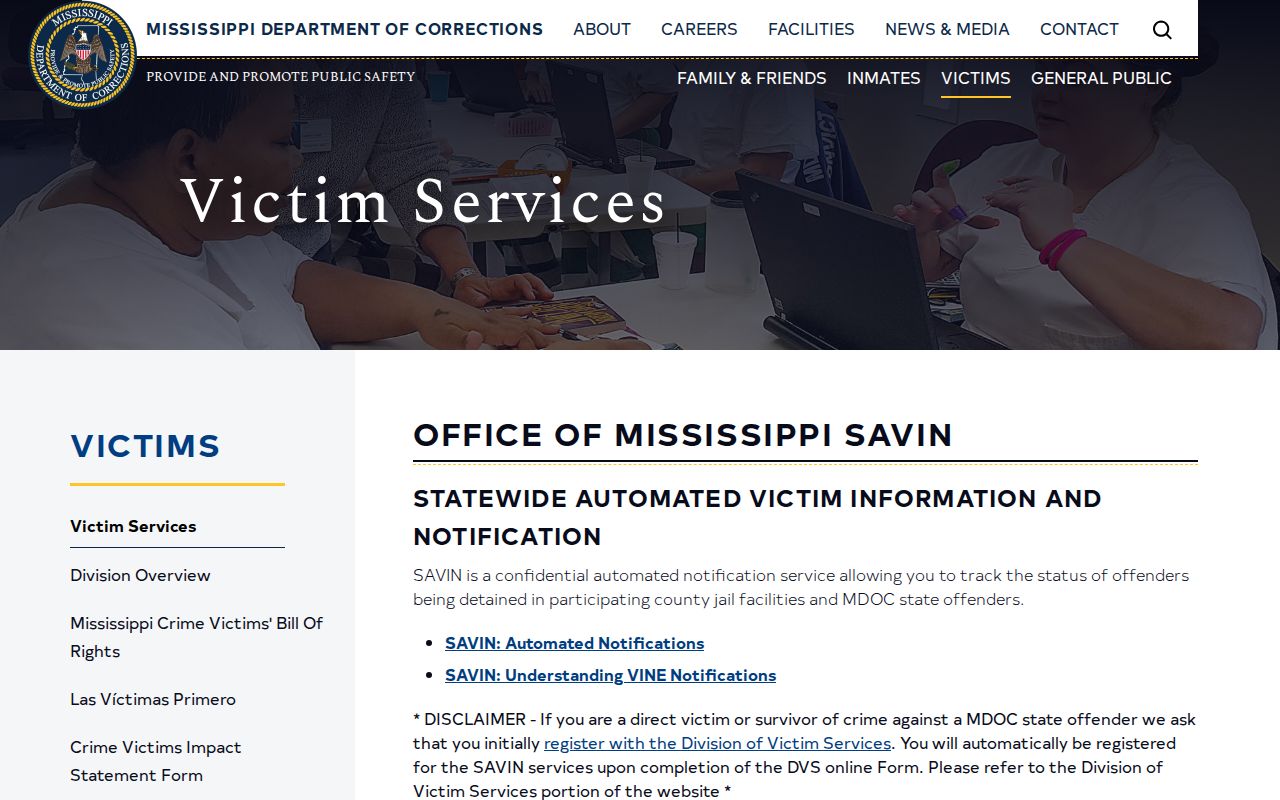
Search Neshoba Inmates on VINELink
Search with enough detail to separate people who share a name. Start with the spelling used by the source agency and one reliable identifier, such as date of birth or an offered offender ID. The current interface controls which fields appear. Never choose a result on name alone. Check the source agency because a person can have a Neshoba County booking, an MDOC sentence, and a later supervision event under the same name.
- Open VINELink and select Mississippi.
- Choose the offender or custody search offered by the current interface.
- Enter the person’s name or available ID. Try verified spelling variants only when the first search does not return the expected record.
- Compare the result’s identifiers and source agency. Reject a match that conflicts with known facts.
- Open one person record and read the status, agency, location, and event wording exactly as displayed.
- Preserve the date checked and confirm a release or transfer with the agency that created the event.
A county arrest can disappear from a current roster for many reasons, including bond, a judge’s order, transfer, data correction, or a system update. VINELink may help resolve the clue when that facility participates, but the Neshoba jail docket or Arrest/Release record supplies stronger proof of the local event. For a state sentence, compare the SAVIN result with MDOC’s inmate or parolee search.
Note: A current roster is an inventory of custody now, while VINELink is a notification channel tied to agency data changes.
Neshoba VINELink Release Record Fields
The available fields can vary by source and by the live interface. Read only what the matching record displays. Status and event labels deserve special care because “released,” “transferred,” and “temporary movement” describe different outcomes. A projected state date should also remain tentative until MDOC records an actual event.
| Field | How to read it |
|---|---|
| Name and identifiers | Tools for distinguishing the correct person; use more than the name |
| Source agency | The custodian or system feeding the event |
| Custody status | The source agency’s present status, subject to its update cycle |
| Facility or location | The reported placement, not proof that every other hold is clear |
| Event type | Release, transfer, return, movement, escape, or supervision change as supplied |
| Event date or time | The time associated with the electronic event, which should be confirmed for a durable record |
| Get Notified | The registration control for future changes on that matching record |
A released result is still limited to the named source. If Neshoba County reports a transfer, ask the jail for the receiving agency. If MDOC reports release to parole or ERS, the person remains under state jurisdiction. ERS means Earned Release Supervision, a discretionary form of community placement. Final discharge is a separate status documented by MDOC.
- Release
- The named custodian ended its hold or placement in the way recorded.
- Transfer
- Custody moved to another agency rather than ending.
- Discharge
- Formal completion of the state sentence or supervision described by the record.
- Source agency
- The office whose electronic file produced the status or alert.
Register for Neshoba Release Alerts
Registration begins from the correct person record. Anonymous registration is available, but the contact route still must be completed so the service can send notices. Delivery choices can include phone, email, or text when the interface offers them. Save the confirmation details. If the event or match later becomes unclear, they help support staff locate the registration.
- Open the matching person record and choose Get Notified or Register.
- Select an offered phone, email, or text route and enter the destination carefully.
- For telephone service, create the PIN requested by the system.
- When an automated custody or release call arrives, enter that PIN to confirm receipt and stop repeat calls.
- For email or text, complete the current on-screen confirmation. Do not assume it uses the same phone PIN method.
- Save the registration and call SAVIN when a message conflicts with the source record.
Mississippi provides 601-359-5759 during standard business hours, 1-888-9-MSSAVIN for round-the-clock English and Spanish help, and TTY 866-847-1298. The available screen and prompts can change. Follow the live form rather than relying on an old screenshot for the final confirmation step.
The official SAVIN notification instructions describe registration and custody-change events.
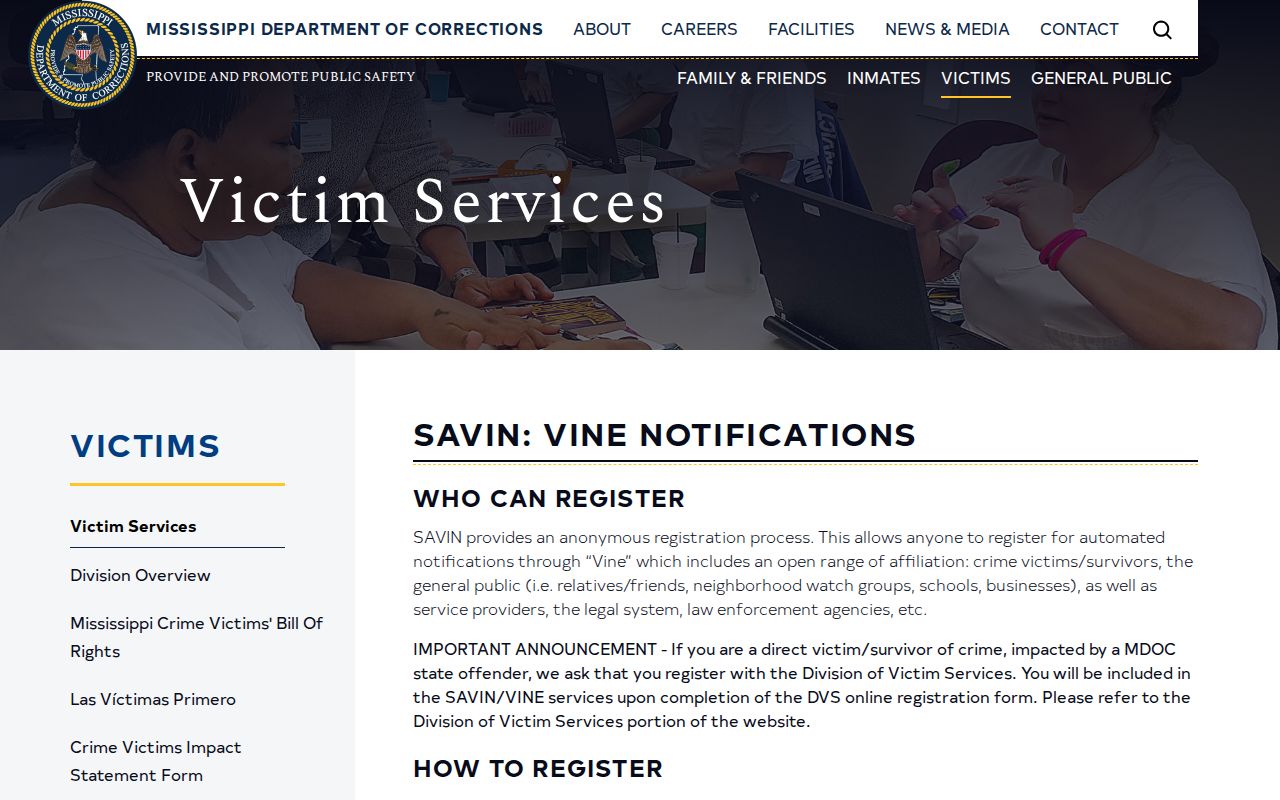
Neshoba Transfers Keep Alerts Moving
Mississippi SAVIN has a Registration Link that can carry a county-level registration forward when a person moves into MDOC or other custody. This is unusually useful in Neshoba County because a local report may say “TRANSFERRED TO ANOTHER AGENCY.” A reader watching only the county jail can mistake that exit for community release. The Registration Link helps preserve notification across the move instead of forcing the inquiry to end at the first jail.
The link does not prove where the person went. Read the alert, note the new agency if shown, and request the receiving-agency notation from the Neshoba jail record when needed. If MDOC received the person, search the MDOC inmate form and location. If tribal custody is indicated, contact Choctaw Detention. A later release must be confirmed with that new custodian.
Multiple file changes can produce multiple notices. Preserve the event wording and time for each one. A transfer alert followed by a release alert can describe two steps, not contradictory data.
Confirm Neshoba VINELink Release Alerts
An alert is timely because it comes from an electronic file change. That same design creates limits. Updates can lag, an agency can correct data, and temporary movement can trigger a notice that does not mean freedom. Confirm a Neshoba County event through the jail’s Arrest/Release report or a written jail-docket record. Match the booking number, released time, and How Released method. A call to the Law Enforcement Center at 601-656-1414 can help with immediate status, but a written record is stronger for a lasting trail.
Confirm an MDOC event through the state inmate or parolee search, Records office, case manager, or discharge certificate. The public field Tentative Release is not an actual release entry. MDOC Records can be reached at 601-933-2889. When an alert says parole or ERS, distinguish post-release supervision from final discharge. The Board grants parole, while MDOC maintains the custody and supervision record.
Court records add the legal reason for a local release. Justice Court may show the initial or bond layer, while Circuit or County Court can preserve later disposition and sentence entries. A closed case does not prove the time of physical release. The Neshoba County released inmate record path connects these sources without treating one result as the whole timeline.
Note: If VINE and an agency record disagree, compare update times and ask the agency that created the disputed event.
Neshoba VINELink Custody Limits
VINELink is not a universal locator. It does not cover federal BOP custody. For a sentenced federal person, use the BOP Inmate Locator. A BOP result marked Released or Not in BOP Custody means only that BOP no longer holds the person. Another agency or federal supervised release may continue. The BOP release document and federal docket can resolve a suspected detainer or supervision issue.
ICE’s Online Detainee Locator applies only when immigration custody is supported. A Neshoba jail exit followed by ICE detention ends sheriff custody, not all detention. USMS manages federal pretrial custody but has no general former-prisoner locator like BOP. Use the federal court clerk or the relevant detention source when USMS custody is involved.
Tribal detention is separate as well. Choctaw Adult Detention operates under Choctaw Court jurisdiction. Do not assume the county jail, MDOC, or a VINELink search covers that custody episode. Youth detention must stay outside an adult public lookup and should be handled only through authorized, confidentiality-respecting channels.
| Custody type | First channel | Strong confirmation |
|---|---|---|
| Neshoba county jail | VINELink if participation is confirmed, plus local report | Jail docket with release time and method |
| MDOC state sentence | SAVIN and MDOC inmate or parolee search | MDOC discharge or actual release record |
| Choctaw adult detention | Choctaw Detention or Court | Lawfully available tribal custodian record |
| Federal sentence | BOP locator | BOP release document and federal docket |
| Immigration custody | ICE locator when supported | ICE or next-custodian record |
The safe conclusion follows the scope of the record. Say “released from Neshoba County custody” when only the county exit is known. Use “released to the community” only when the method and next-custodian evidence support it.